
2025 has seen the biggest measles outbreak in the U.S since 1992. 165 people have been hospitalized; 3 have died.
Most of the 2025 cases involve unvaccinated patients – and unfortunately, Native communities often have lower vaccination rates than the overall U.S. population. There are a few reasons for this and they’re reasons that play a role in many Indigenous health barriers: unreliable transportation, living an hour or more from the nearest clinic, and high provider turnover and shortages. Families that want to keep children vaccinated on schedule may not get the information they need and or be able to visit a clinic when the right resources are there.
So it’s not surprising that some state statistics, including from South Dakota and Montana, show that Native Americans are less likely than white children to be vaccinated on schedule. The national measles vaccination rate is significantly lower for Native Americans who use the mostly rural Indian Health Service. About 76% of children 16 to 27 months old had gotten the first shot, according to data collected by the agency during recent patient visits at 156 clinics. That’s a 10- percentage-point drop from a decade earlier.
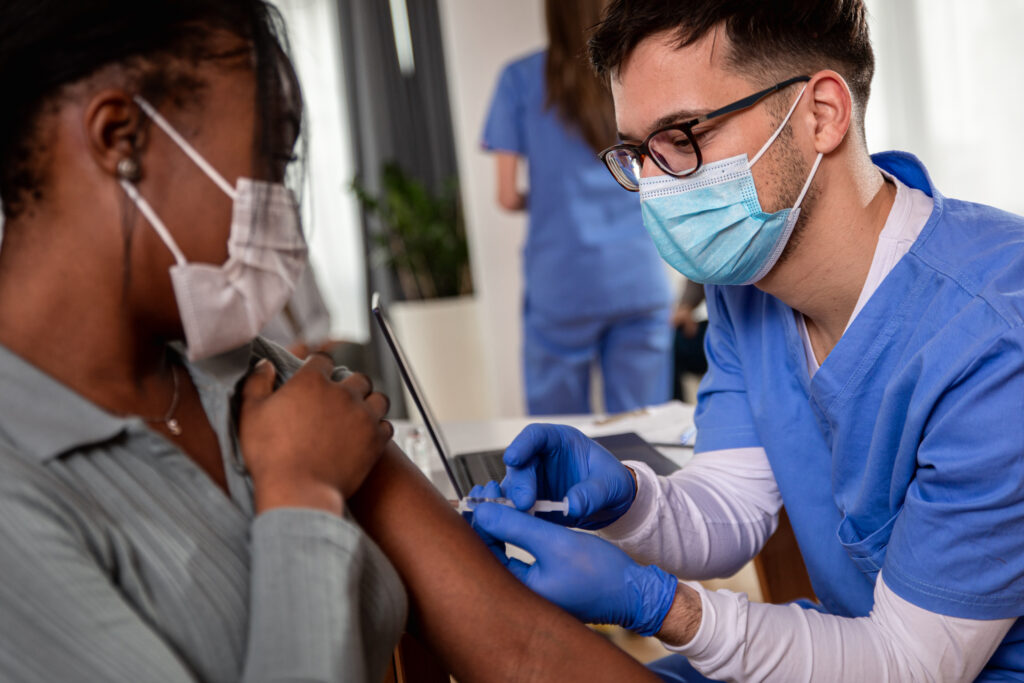
Why Vaccination Rates Matter in Native Communities
Measles can survive for up to 2 hours in the air in a space visited by an infected person – and can sicken up to 90% of unvaccinated people, according to the Centers for Disease Control and Prevention. Outbreaks can spread quickly, making vaccinations a critical tool for community health.
So what does this mean for Native communities?
This KFF article explains how Tribal leaders and organizations have responded to outbreaks by hosting mobile vaccination clinics and creating social media campaigns to overcome vaccine skepticism.
If your healthcare team serves Native patients and communities, consider creating your own resources and outreach programs to ensure both your providers and patients are vaccinated. Need help? Project ECHO at the University of New Mexico offers an online video series on the basics of measles treatment and culturally relevant communication strategies.
Community-led strategies always carry a little extra power when it comes to health equity. By promoting measles vaccines in a culturally sensitive context, we can help prevent the threat of infection in Native communities – and that’s a goal we can all work toward together.
