

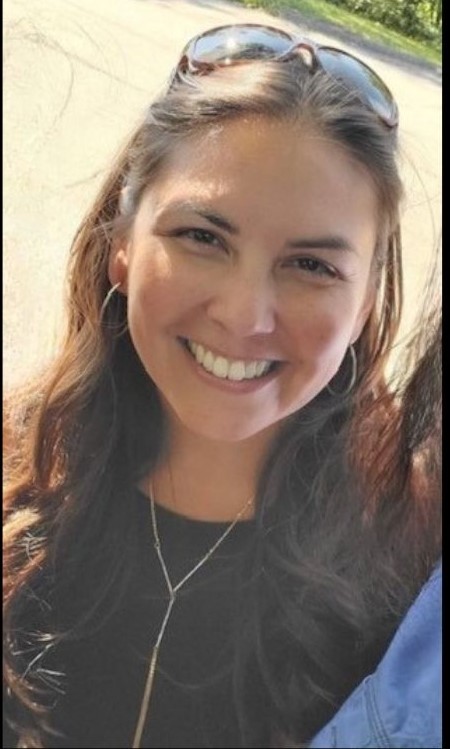
Dr. Amanda Bighorse (Cherokee) is a family medicine physician and a rising star in Indigenous health. Because we’ve been lucky enough to work with her, we know what an incredible physician she is – and we wanted to share her insights with you.
Hi Dr. Bighorse! Let’s start with the basics. What inspired you to get into medicine?
I knew from a very young age that I wanted to be a doctor. When I was little, it was always my focus.
My paternal grandmother was full-blood Cherokee, and she had a vast knowledge of plants that had healing effects. That just fascinated me. She was a healer in her own way.
On my mom’s side, my grandparents were both sick when I was really young. They were in and out of the hospital so we spent a lot of time there, and I always felt comfortable in that environment.
That started the journey, but then when I was in high school, my father was diagnosed with leukemia and that propelled me forward. We had a really awesome family doc who knew I wanted to be a doctor, and kind of took me under his wing. After he diagnosed my dad, he sent him to an amazing oncologist who also guided me along the way.
Those two docs furthered my desire to learn about medicine. Every step along my journey, I had somebody encourage me or had supporters who helped me achieve my goal. There have been times when it’s gotten really hard because medicine is very hard, but I’ve never been able to imagine myself doing anything else. I feel this is what I was led to do.

We’ve heard about barriers to Native students when it comes to academic pathways to medical school. Some of our Native physicians say that they felt like an outsider in med school.
I do think that there are barriers, and a lot of times, we’re the first generation going to college or graduate school, so we don’t really have anybody to guide us along or pave the path for us. Sometimes you don’t know what to do next or where to look – and of course, the expense of both college and professional school can be outrageous.
I feel very fortunate because I grew up in Oklahoma where there is a large Native population, with more resources and mentors than others might have had. My faith is very important to me as well, and I feel like God has led the way for me to overcome a lot of the barriers that were presented. I definitely had to put in the hard work academically, and make the sacrifices of my time and find the financial resources as well though.
What was that like?
We had a lot of Native organizations and leaders at the university and medical school I attended. There were Native sponsors from all different professions; some were elders, professors, attorneys, engineers, leaders in their field who had paved the way for us. I know not everyone is fortunate enough to have that, and it can make things more difficult. The good thing though is that there are organizations like ANAMS (the Association of Native American Medical Students) and the AAIP (the Association of American Indian Physicians), with mentors and leaders that can help when you do encounter those barriers of feeling alone and isolated. People who have been in your shoes and can be a listening ear, and offer guidance, and advice.
The great thing about this is they are always welcoming and it doesn’t matter where you live, you can connect with them and stay in contact, then meet up at conferences, special events, etc.

Our president Whittney LaCroix is always talking about how we need to get more youth into the healthcare fields. Some people tell us they didn’t see Native providers at their IHS facility growing up and it’s a case of “You can’t be it if you can’t see it.” How can we change that?
One thing I think we could do is set up a mentorship program. We have social media, e-mail, websites and things like that. I definitely think we could create some kind of database where we have different fields with information on tribes, profession, best way to contact them or maybe set up meet and greets.
I love that idea. Did you experience anything like that?
When I was in college, I received a scholarship to a medical school pre-admission workshop in New York City. There was a panel of Native medical students who allowed us to ask questions about medical school and then socially interact with afterward.
Those medical students are now physicians. It’s really awesome to see them advance in their careers and now they’re my colleagues. Thinking back, they helped lay the foundation for my career. They planted the seeds and reassurance that I could do this too. I could be like them. They were encouraging, supportive, and were willing to mentor.
Most Native students don’t know that it’s even a possibility because they don’t see other Natives in these professions. If we held events where we could meet the students and then share our contact information, we could help them along their journey by offering to review their personal statements, applications, mock interviews, or being available for them to shadow. They would be able to see they’re not alone and what resources are available for them. This would, hopefully, in turn encourage them and allow them to realize that “yeah, I can do this because she or he did that.”
Where did you end up going to school?
I went to Oklahoma State University College of Osteopathic Medicine and did a rural residency in Tahlequah. Half of that residency was spent at Cherokee Nation in a Tribally-run hospital and the other half was spent at the Tahlequah City Hospital, so I got the best of both worlds with a community hospital experience and a Tribal health experience.
I actually grew up in the IHS health system and the Cherokee Nation health system, so I’ve seen how it’s evolved over the years. From high school all the way to becoming an attending physician, I worked with the Cherokee Nation as an employee, so it’s been home to me both personally and professionally.
When you talk to patients, do they ever ask how you got into your career?
They do, especially elderly patients. They sometimes have grandchildren wanting to go into medical school so when they see my last name and meet me, they get excited to hear that I’m actually a doctor. They’re proud, even if they’re not my tribe. I’ve had younger patients who said they wanted to go into medical school, and I’ll talk to them about it.
You sound like a natural-born teacher. Do you have any plans to teach?
Previously, I got to do some teaching with medical students and residents and really enjoyed it.
I have to ask you the obvious question. Do you come across physicians and nurses who make blunders or are disrespectful toward Native patients? What’s your advice for helping providers approach from a more respectful and knowledgeable place?
It’s important to understand, when encountering our Native patients, they may still speak their language, practice traditional customs and/or be going to traditional healers instead of following the recommendations you have offered, which could come across as being noncompliant. In the rural communities that we serve, they may not have access to transportation, or even running water/indoor plumbing or electricity, making it difficult to store medications including insulin. They’re just trying to survive the day. This makes it even more imperative that we as providers develop rapport and mutual understanding with our patients.
That is such great guidance. I feel like there’s a generational difference there too, where the new generation of physicians take that partnership approach instead of just giving commands and the patients really appreciate it. Any other advice?
Yes, I agree! I’m still learning that we have to be flexible and not so rigid on things, and always remember that there are multiple factors that go into why people do what they do.
I tell my patients that I’m here to partner with them, to give them the information, answer their questions, listen to their concerns, and then we can discuss the plan moving forward. It’s not a dictatorship. We’re just doing the best that we can. We’re working together to try to achieve the same goal which is achieving the best overall health for them.
You sound like the kind of physician every patient wants to see! Thank you so much for talking to us, Dr. Bighorse – we’re so excited to have worked with you.
Thank you! I am excited to work with you as well! I love a challenge and I love Native health. It’s where my heart is. I want to help my people; this is where I want to be.