
by Zoe Sanabria, RN
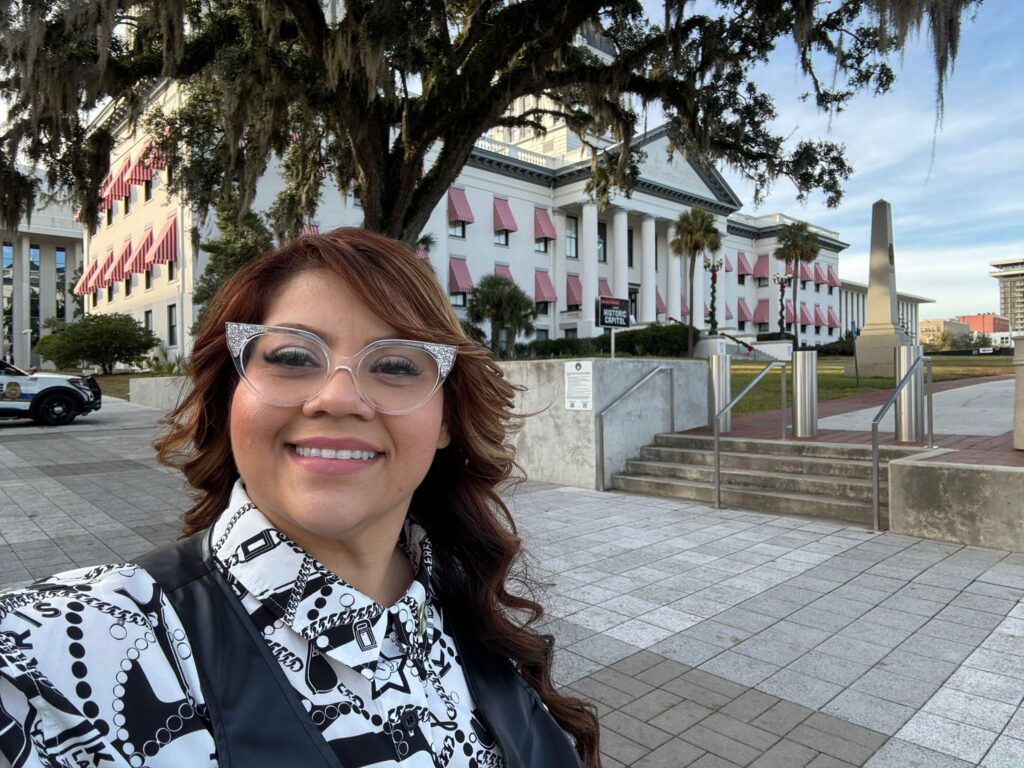
Last week, I walked the marble halls of Florida’s Capitol not as a politician or lobbyist, but as a Family Nurse Practitioner (FNP) student, and as a voice for thousands of nursing students whose futures depend on decisions made far beyond the classroom. I had the opportunity to participate in Capitol Hill Day in Tallahassee with the Florida Association of Postsecondary Schools and Colleges (FAPSC), advocating against legislation that threatens the accessibility and flexibility of nursing education across our state.
I traveled with my university alongside my Program Director, Dr. Andino, and the Dean of Student Affairs, Dr. Buitrago, leaders who understand that education policy is not abstract, but deeply personal. Together, we stood in defense of nursing students as lawmakers consider HB 121, a bill that could significantly impact universities that offer flexible, nontraditional program models. These programs are not shortcuts; they are bridges, connecting hardworking adults to careers in service.
As I moved from office to office, I was reminded why nursing became my third career choice. Nursing, for me, was never just about a title or a degree. It was about service. It was about following the example set by my father, who taught me early on that a meaningful life is rooted in giving back, especially to those who are often unseen and underserved. His commitment to service shaped my desire to work with vulnerable populations, participate in missionary trips, and dedicate my professional life to communities that face the greatest barriers to care.
That same influence led me to Tribal Health. While I may not serve on the front lines as a nurse today, I continue that mission in a different, but equally vital, role: as a recruiter.
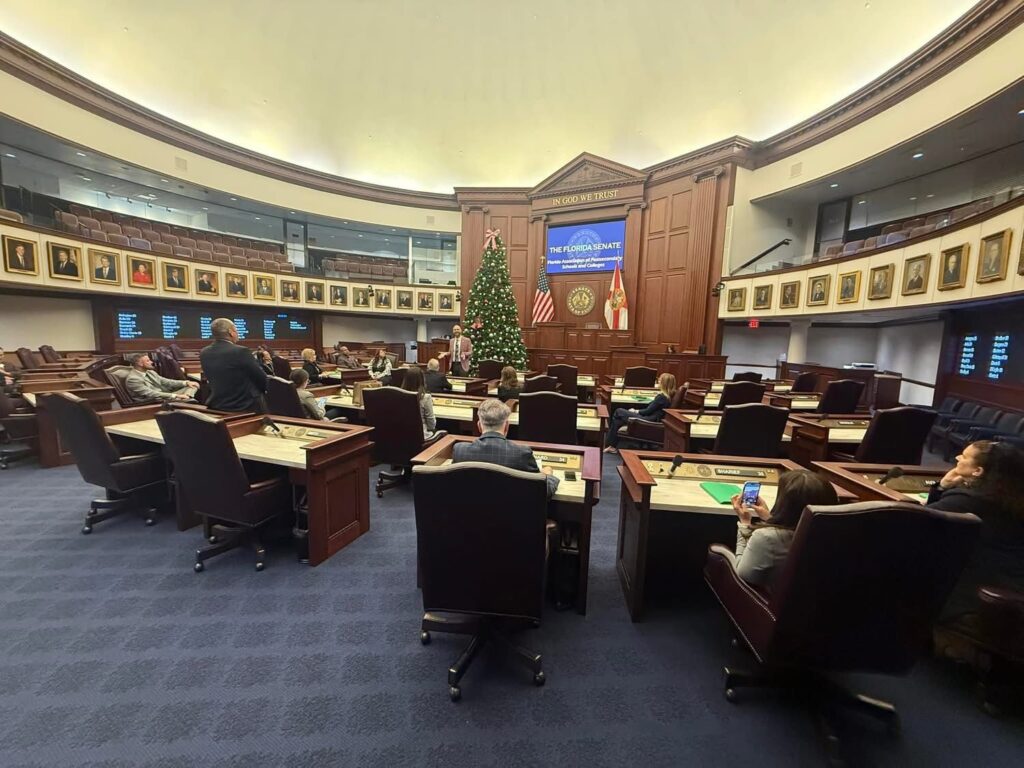
Through Tribal Health, I help place compassionate, skilled clinicians into tribal and underserved communities across the country. It is service behind the scenes, ensuring that care reaches places where it is urgently needed. Advocacy, I’ve learned, takes many forms.
During Capitol Hill Day, I had the privilege of speaking with and shaking hands with Lieutenant Governor Jay Collins and Senate President Ben Albritton.
I also met with multiple legislators who offered me the space to speak on behalf of non-traditional students, students like me who are full-time parents, full-time employees, business owners, and full-time students. Our journeys are complex, but our commitment is unwavering.

If HB 121 passes without thoughtful consideration, universities like the one I attend – institutions designed to support students balancing real-life responsibilities – could be deeply affected. The consequences would reach far beyond campus walls, worsening nursing shortages and limiting access to advanced practice education at a time when our healthcare system can least afford it.
Standing in the Capitol, I felt the same sense of purpose that drew me to nursing in the first place. Advocacy is an extension of care. Just as nurses speak up for their patients, we must speak up for our profession and for the students preparing to serve on the front lines tomorrow.
I left Tallahassee with gratitude and hope, gratitude for the opportunity to be heard, and hope that lawmakers will recognize that nontraditional students are not the exception, but the backbone of today’s nursing workforce. My presence there was a reminder that service can begin in many ways: in clinics, in classrooms, in Tribal communities and sometimes, in the halls of the Capitol itself.